
"Josh Hartnett Breaks Down His Filmography from The Virgin Suicides to 30 Days of Night to Trap"
Интервью Джоша / Josh's interviews
Сообщений 241 страница 243 из 243
Поделиться2412025-05-13 11:23:25
- Админ


- Откуда: Феодосия
- Зарегистрирован: 2007-05-28
- Приглашений: 0
- Сообщений: 18057
- Пол: Женский
- Провел на форуме:
3 месяца 8 дней - Последний визит:
2026-08-26 10:51:40
Поделиться2422025-05-15 14:14:46
- Админ
- Откуда: Феодосия
- Зарегистрирован: 2007-05-28
- Приглашений: 0
- Сообщений: 18057
- Пол: Женский
- Провел на форуме:
3 месяца 8 дней - Последний визит:
2026-08-26 10:51:40
Josh Hartnett (!) Is the Action Hero We Need
For his latest film, Fight or Flight, the '90s heartthrob wanted to go to an entirely new place—and do his own stunts. Over coffee in New York City, he tells us about his most thrilling role yet, and how he feels about his media-dubbed renaissance.
By Josh RosenbergPublished: May 14, 2025 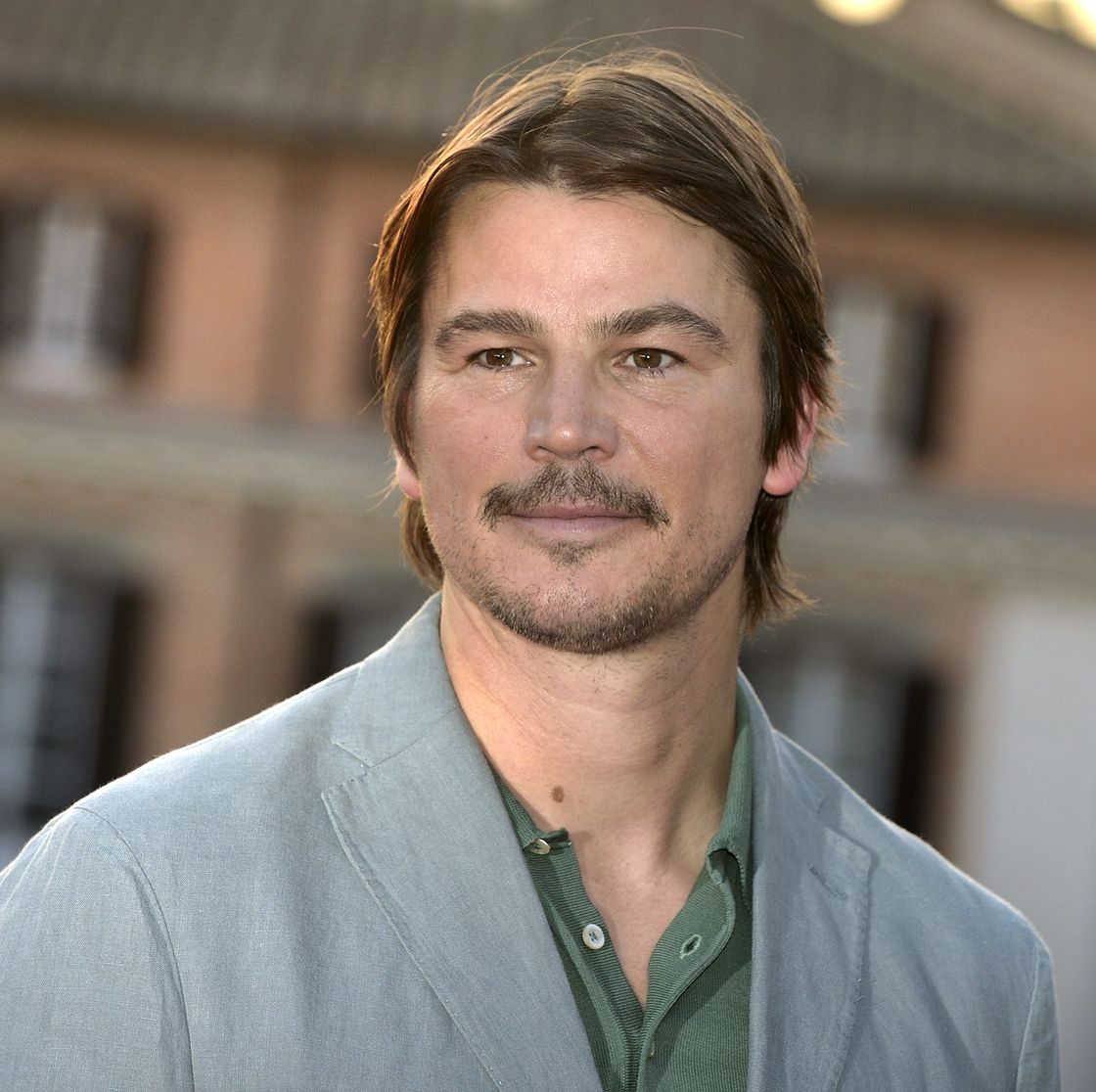
People like a comeback story," Josh Hartnett tells me. "Even if I was here the whole time."
It's a Wednesday morning in early May, and Hartnett and I are discussing his return to the spotlight at the Crosby Street Hotel in New York City. For an actor who supposedly "left Hollywood" in the early 2000s, the forty-six year-old seems as busy as ever. It’s the second time that he’s made the trip from his home in England to New York for a film in the past month. Naturally, he's incredibly jet-lagged.
"It's strange living in a hotel," Hartnett tells me as he sips his coffee. He's wearing a navy button-up, a blue baseball cap, and jeans—the quintessential dad outfit. "I spend so much time at home now with four kids. But when I'm making films, that's kind of what I do—live in hotels," he says. "It totally used to be the best thing ever when I was younger, people cleaning up after me and stuff like that. But now I miss my family."
As we talk through fond memories of his young life coming up in New York, I can't help but notice that our room at the Crosby Hotel is furnished with a staggering amount of dog artwork. Normally, I would ask what he thinks about the many canine portraits and whimsical sculptures surrounding us—it genuinely feels as if the pups are staring into our souls—but we're both a bit distracted this morning. For Hartnett, it's the jet lag. Myself? Well, I just watched Hartnett kill a man with a chainsaw in his new action flick, Fight or Flight.
The film, which premiered in theaters this past weekend, stars Hartnett as a disavowed secret service agent who is still as strong as an ox—even with a gut full of booze. (Stronger, even.) In exchange for his freedom, the former agent is roped into protecting an asset on a dangerous flight full of assassins. Fight or Flight is fun, outlandishly violent, and full of incredibly impressive action choreography.
The indie fight-fest is also the latest entry in the media-dubbed Hartnettaissance, an era of exceptionally stellar performances from the ‘90s Hollywood heartthrob. Recent Hartnett hits include M. Night Shyamalan's Trap, a cameo in The Bear, and Christopher Nolan’s Oppenheimer. Though Hartnett is clearly grateful for his comeback moment, he maintains that he still works in the industry on his own terms.
“Whatever anybody wants to call it, if the work that I've been doing is helping me get the jobs that I'm able to do right now, which I think it is, then I'm all for it,” Hartnett says. “I've always had a lot of luck working with really talented people. In this particular time, I'm just working with super talented people who also have the reach to get their movies seen.”
True to his word, the actor took on Fight or Flight not because it had major financing or big-name producers, but because he simply believed in the project. As the story goes, first-time filmmaker James Madigan allowed Hartnett to perform all his own stunts. And for a film comprised of several claustrophobic, close-quartered fights, it’s amazing that Hartnett left the project in one piece.
“I wanted to see if I could do it,” Hartnett says. “I was 44 years old when they sent me the idea, and I thought, Nobody's sending me scripts to do action anymore. How fun would it be to do that? I was like, Okay, well if Keanu can do it, I'm going to give it a shot.”
Below, Hartnett shares how he truly feels about the Hartnettaissance, why he wanted to do his own stunts in Fight or Flight, and the advice that Robert Downey Jr. gave him after Oppenheimer.
ESQUIRE: Even though Fight or Flight is finally coming out now, you actually shot this film before Trap, right?
JOSH HARTNETT: Yeah, we shot this two and a half years ago and then it sort of languished. It was at a studio that was going through some problems and some changes in management. So, we finally shopped it around a little on the sly. Vertical was very excited about it and they were giving it a lot of attention. And then funnily enough, we sold it back to the studio that let it go. It seems like recently there's been quite a few movies that have an action-comedy element to it. I really hope people do see it, because it was so much fun to make. I really think it's one of the most entertaining pieces of $10 million filmmaking that you have out.
Why were you interested in doing an action film, especially one where you do your own stunts?
It was just a lot of fun. I was 44 when we shot it, and the last time I'd done all my own stunts was for a movie called Bunraku when I was 29. Different set of circumstances, different body. But I loved doing comedy and for a long time in my career, nobody saw me doing it. What Jim [Madigan] told me initially when we first decided to do it was he wanted the fight sequences to be musical numbers, like old-fashioned musicals. It is actually a part of the storyline and the characters learn something over the course of it, or they—in this case—get really hurt and it changes the nature of the next scene. That puts the character first, and that’s always nice to hear as an actor.
Were you influenced by any action stars before filming Fight or Flight?
I hate to be wanky and go overseas, but Takeshi Kitano’s The Blind Swordsman really stuck with me. Not just for the fighting, but also the craziness. And the same thing with Kung Fu Hustle. I thought there was room for us to do something that was a bit more openly playful. There were some things that I did that were fun for this character. I like extreme characterizations and gaining a lot of muscle, so I had kind of like a drinker's body. The hair thing, of course, was funny. Doing action sequences pretending to be on toad venom, like that scene that from Wolf of Wall Street where DiCaprio is crawling back to his Ferrari. It was like, What if that guy had to fight? And our Director of Photography was amazing. He did The Raid and Gangs of London, and we wanted the fights to feel real and the punches to hurt, but we also wanted it to seem very over the top. A lot of people just view these films as B movies, but it's fun and it's supposed to be entertaining.
There's no A-movie version of this.
No. And why would you even try to do that? I've been talking a lot about the state of the movie business with people over the years, and people need to calm down. Everything's cyclical and we just have to chill out for a second and not lose our heads about where the business is going, or label everything doom and gloom. I love the experience of going to a theater and watching a film with other people. The energy's infectious. I remember being a kid and seeing the first Batman by Tim Burton, and wanting to go buy another ticket to watch it again. It just means more than watching it at home. People don’t seem to be going to the theaters in the same numbers. But I hope people will come back around to that.
I think that people still enjoy going to the movies. They just need the right movie to see.
Yeah, and that movie is Fight or Flight. [Laughs.]
I feel less defined by the movies that I'm making.
You once said that when you were younger, you thought directors liked that you were green because it meant that they could get you to do whatever they wanted. Do you feel the reverse now that you’re the veteran actor working with a first-time director?
Directors still get me to do the stuff that they want me to do. But I'm more game for that now. I feel less defined by the movies that I'm making. When I was younger, I was still defining myself as a person, and so each time I put myself out there in public, I felt like it was really having an impact on how people saw me. And maybe this will do that too, to an extent, but I think people have a pretty good idea of who I am now.
So that's why I wasn't afraid to do something like Trap where the character is so messed up. Recently, somebody was telling me a story about Anthony Hopkins after he did Silence of the Lambs. He was introduced to the world basically as Hannibal Lector, even though he done a ton of work. And he said, "Everywhere I went, everybody was terrified of me." I wouldn't have wanted that reaction in my life, but I had faith that people had seen other things that I'd done, and they wouldn't be directly terrified of me. So, Trap was a plausible pick. But in this one, I don’t think I shifted any of Jim's initial concept of what he wanted from it, tonally. I added little things that I thought would be fun. But directors, I think, just generally have more faith in me these days. Maybe that does have something to do with age and experience.
Hollywood basically declared that you had left the acting world, and have now suddenly returned. But you’ve been a working actor this entire time. Do you find that strange at all?
I don't know, it's a narrative. We live in a world of narratives. I do it for a living. But I was making movies. Worthy films like Inherit The Viper and Oh Lucy! And a lot of really small, cool films.
Does the narrative bother you? Do you wish everyone just moved on?
Not on a daily basis. You know what I mean? I would like the narrative to be more straight-up—that I was doing interesting movies, and then maybe that would draw some attention to those movies—but it doesn't bother me. It's nice that people have an interest and that helps me get work. But I really don't think about it that much, honestly.
Do you think it's had any sort of tangible effect the opportunities you'd received recently, like your cameo in The Bear?
I don't know that the directors I'm working with really pay attention to that stuff. It’s possible that I'm more viable as a contributor to their film because the business side of it sees me a little bit differently after being in some bigger movies Maybe that makes it possible for them to cast me. But I don't think that they're reading the Daily Mail and going, "Now I'm going to cast him."
With The Bear, I've known Chris Storer for a long time. I was going to do his first film, but it never got made. He was a young, first-time filmmaker, same sort of situation, and I really thought he was going to be amazing. Clearly, I was right on that one, but he couldn't get the budget together. And then a couple years went by, and I saw The Bear come out. It had become a phenomenon already by the time I'd seen it. So, I just texted him right away. I was like, "Holy shit, you did it, man. Congratulations. This is incredible." And he was like, "Hartnett! You want to come be in it?" I immediately said, "Yeah!"
How did it feel to win the Screen Actors Guild Award as part of the Oppenheimer cast?
That was an ensemble situation, so that was cool. It was nice to be up there, but it wasn't for me. You know what I mean?
You were a part of it!
Yeah, I don't know. I remember Robert Downey Jr. turning to me afterward. I was just congratulating everybody. He goes, "You're unflapped! You're unflappable." And I was like, "Well, it's not about me." I just didn’t think it was, and I still don’t, really. But he goes, "Why don't we just take it in?" He likes to really hit you just where... you know? I love that about him.
https://www.esquire.com/entertainment/m … interview/
Поделиться2432026-08-26 10:46:45
- Админ
- Откуда: Феодосия
- Зарегистрирован: 2007-05-28
- Приглашений: 0
- Сообщений: 18057
- Пол: Женский
- Провел на форуме:
3 месяца 8 дней - Последний визит:
2026-08-26 10:51:40
Meet Josh Hartnett Beneath the Surface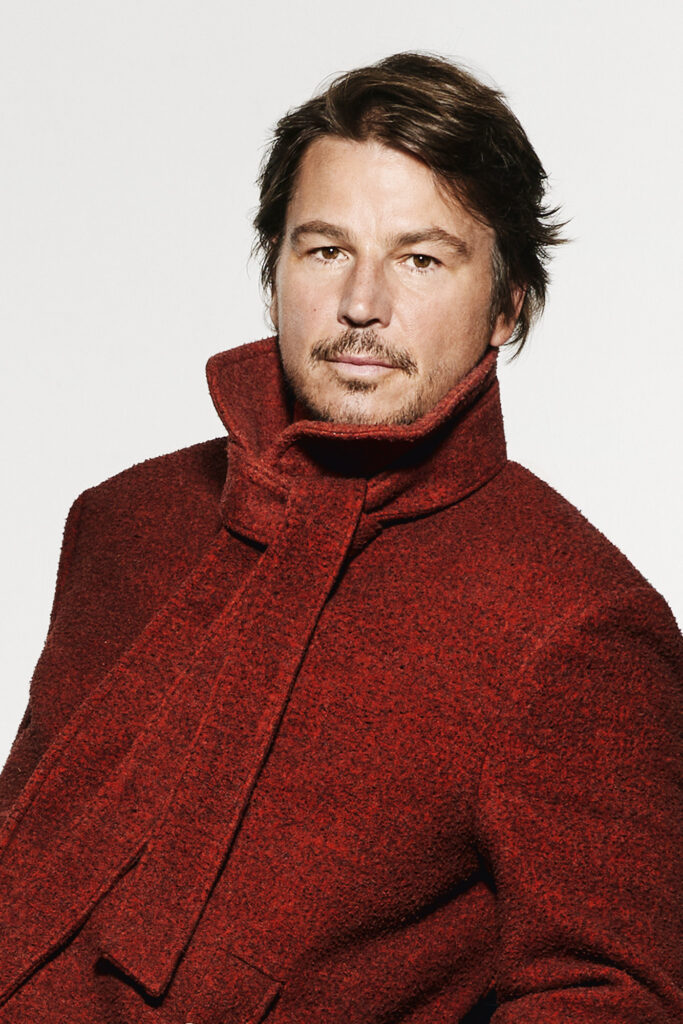
Marc Castaldo / August 25, 2026
When I told my brother I would be interviewing “Slevin,” he smirked, taking a moment to decide whether I was pulling his leg. As one of the stars of his all-time favourite films, Lucky Number Slevin, Josh Hartnett has achieved legendary status in our household, so joking about landing an interview with him would have been nothing short of unforgivable. Fortunately for both of us, I was as serious as I was excited.
Hartnett made his name playing Hollywood heroes in films like Black Hawk Down and Pearl Harbor. Two decades later, though he seems hardly to have aged, Hartnett has long since outgrown Hollywood’s archetypal young hero. Instead, he has been sought out for more layered, morally complex characters, roles that allow him to explore greater depth and nuance as a performer. With that evolution has come something equally valuable: the confidence and trust of revered filmmakers who recognize his willingness to take risks and push his artistry in new directions.
“I like characters that have a complexity of motivations — not necessarily straight heroic characters, but characters with shades of grey.”
As Hartnett continues along his creative journey, he takes on one of his most compelling roles yet: Calvin Penney in the upcoming thriller, Below. The miniseries makes its world premiere at this year’s Toronto International Film Festival before arriving on Netflix this October.
Filmed in St. John’s, Newfoundland, Below presents Hartnett in a new light. He plays a hardworking fisherman and devoted father haunted by loss and the unexplained dangers beneath his coastal community’s waters. Hartnett further showcases his remarkable range by flawlessly mastering the distinctive Newfoundland accent, delivering one of his most immersive performances, one that feels entirely authentic to the province’s culture and character.
Having screened the first two episodes ahead of its premiere, I can say this: Below is gripping, beyond entertaining and will keep you on the edge of your seat.
What was the moment you knew Below was something you wanted to be a part of?
It was the script, and speaking to Jesse McKeown for the first time really let me in on the ideas that he wanted to push to the front of this show. He wanted to write a story that surrounded this group of people who’d been marginalized for a long time, pushed around by the government, pushed around by the larger corporations in the fishing world that have kind of sidelined not only this group of people, but this whole way of life that existed up in Newfoundland for hundreds of years. And his wife is from there, his father-in-law, mother-in-law, and whole extended family are up there.
He fell in love with that culture. And you could tell from the writing. He had written very full characters that had flaws — interesting flaws, unusual flaws, things that you didn’t really find in your average script, but also a kind of dark, ironic sense of humour that’s a little bit off-kilter, and just a way of looking at the world that is very singular. When you find something that’s unique, you just go, “Oh, wow. I want to be a part of this because it’s something special. It’s something new.”
Newfoundland itself becomes a character in the series.
Jesse very specifically wanted to write something for the Newfoundland fishing community. That specificity is what makes the show so unique because most of the actors are from Newfoundland. Most of the people who worked on it, beyond the acting side of it, were from the local area as well. We had this real sense of being immersed in the culture.
That’s a wonderful thing to have happen when you’re shooting on location and you’re given the gift of being brought in as a member of the community. They show you how to live that life without even having to really show it to you.
How would you describe the camaraderie you shared with your co-stars?
We all brought out the best in each other. Only one member of the Penney family was from Newfoundland, so the rest of us had to learn the accent, and we were terrified of it because we wanted to get it right. We all wanted to sound like we were from the same place.
We started working on the accent together as a group, and I think that was really bonding because we saw not only ourselves, but each other at our worst while we were just starting out. We had to encourage one another because we knew we had this date where we’d start shooting in two weeks, and we had to work through everyone’s sounds to make sure we all felt like we were from the same family.
When you reflect on those roles, what makes Calvin Penney particularly special?
I like characters with duality. I like characters that have a complexity of motivations — not necessarily straight heroic characters, but characters with shades of grey. What I responded to about Calvin initially was that he’s a hard person to get to know. In this village, they don’t like him or trust him. His son doesn’t really like him very much at the beginning either because Calvin has been holding him back.
But all of that is motivated by a very well-thought-out and clear psychology that Jesse has created for the character. It’s all understandable once you watch the whole show. At the beginning, though, I love that he’s not the easiest character in the world to like. You must get to a point where you understand him more than you like him.
What draws you to projects today that perhaps you wouldn’t have been interested in 20 years ago?
Well, people aren’t asking me to play the 17-year-old anymore. That might be a surprise to you, but it’s not to me. There was a period in Hollywood films and in my career, specifically, when people wanted me to play straightforward heroic characters. The layers weren’t necessarily there on the page, nor were they being sought by the studio or the directors for me to flesh those characters out. That’s changed. I’ve gotten older and become more experienced, and people trust me a little bit more with characters that are more complex. I’ve made sure I’ve found characters with that complexity and played them to the best of my ability and hopefully created some entertaining work in the meantime. As I’ve gotten older, I’ve really been able to stretch my wings as an actor.
As you take on those different characters and commit yourself so deeply to a role, how do you find the balance between fully immersing yourself in the character while still maintaining your own sense of self?
Well, I’m not a method actor, whatever that is. I just came off a job that was very difficult to let go of because the person I was playing was also the director and writer. I’d just finished this Oliver Stone film. It’s a loosely autobiographical look at a certain aspect of his life, fictionalized, of course, but having a director who’s that in tune with every choice you’re making, constantly pushing you to go a little further or not do exactly what you wanted to do, really keeps you off balance.
I had to make time to speak to my kids at night and spend time with my wife, but it was difficult to let the work go because I was always thinking about what Oliver wanted from me. But with most films, if you’ve done your homework, you get to the set and deliver everything you’ve got, knowing this is the only opportunity you’ll ever have to create that scene. Once it’s done, it’s gone. It’s totally ephemeral. You take a breath, move on, enjoy a few moments with your family, then prepare for the next day’s work.
“If anybody is looking back at my career, I hope they see that I was always trying to push the boundaries of my own abilities and understanding.”
This was also the first time you served as an executive producer on a television miniseries. What was it like wearing both hats?
It was really relieving. It was great because I was able to insert my two cents after the work had been done. On most acting jobs, once you’ve wrapped, it’s basically: “Don’t let the door hit you on the way out. We’ll let you know when to show up for the premiere and start promoting it.”
That’s terrifying because they have complete control over the work you’ve done. Eventually you develop a thick skin about it and learn to let it go. But in this instance, and on a few films I’ve worked on, I was able to be involved in post-production as well, and that’s fantastic. I was able to help with casting, work through the scripts, and discuss ideas. Just being able to weigh in on those things and offer suggestions before we got to shooting was a really relieving process.
What’s life like in the UK?
It’s very busy. We’ve got a tiny farm, but it’s filled with little animals. It’s more like a petting zoo than a farm. My kids love them. We travel a lot because I travel for work quite a bit, and the kids have a great school. They go to an arts school, and they absolutely love it. They’re all very artistic kids, and we try to keep life loose and fun.
When you look back on your career, what do you hope it says about the kind of storyteller you are and the storyteller you’ve become?
Oh, man. If anybody is looking back at my career, I hope they see that I was always trying to push the boundaries of my own abilities and understanding. I hope they see that I was always trying to do things that were outside the box, things you couldn’t get anywhere else.
I’ve been very lucky to find collaborators like Jesse on Below who want to push that same mantle forward. I hope people recognize that has always been my goal. I want people to come along for the ride with these films and these shows because I genuinely think they’re interesting, fun, and entertaining. I feel incredibly lucky to be able to make them and then share them with audiences.
What’s the one thing you want to tell the audience before they press play on Below?
Leave your expectations at the door. You don’t know what’s coming.


